
What is a hyperbaric chamber? A manufacturer's guide
A hyperbaric chamber is a sealed vessel in which pressure is raised above atmospheric to treat patients, decompress divers or give access to compressed-air work. Tech Plus, a chamber designer since 1988, explains how it works, the pressures involved, the main types and the standards that apply.
- Since 1988
- 28+ countries
- Designed in Bandol, France
The hyperbaric chamber: a pressure vessel for human occupancy
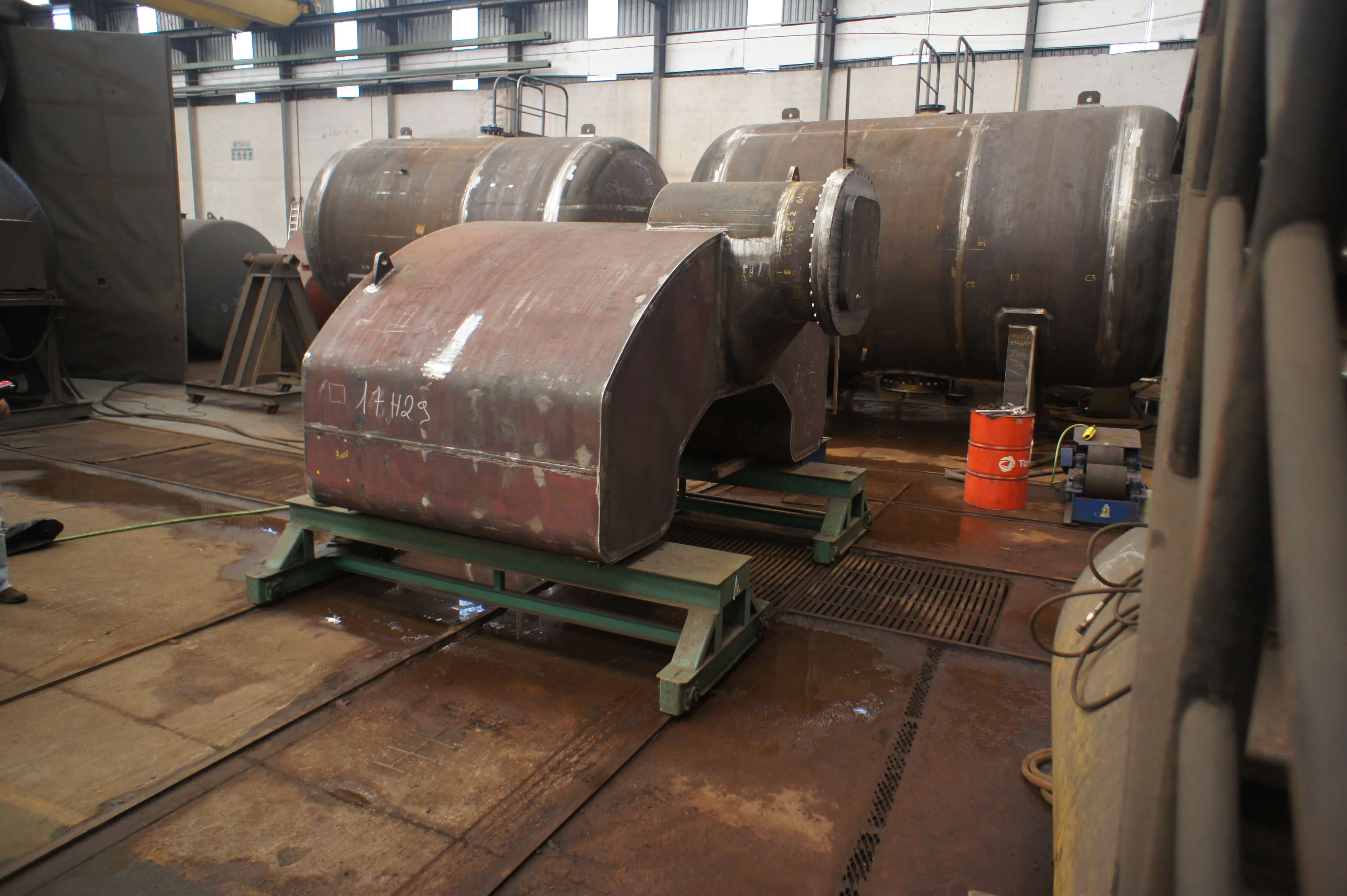
A hyperbaric chamber is a rigid, sealed pressure vessel in which one or more people are exposed to a pressure higher than atmospheric. Whether it is a recompression chamber for divers or a man lock on a tunnel boring machine, the principle is the same: only the working pressure, the number of occupants and the on-board equipment change.
Three fields rely on these chambers: hyperbaric medicine, where patients breathe oxygen under pressure (hyperbaric oxygen therapy, or HBOT); commercial and military diving, to decompress divers and treat decompression sickness; and compressed-air work, notably on tunnel boring machines. Veterinary chambers extend hyperbaric oxygen therapy to animals.
Tech Plus has designed hyperbaric chambers since 1988. Founded by Laurent Freani and based in Bandol, in the Var region of southern France, the company has delivered chambers to more than 28 countries, for hospitals, armed forces, tunnelling contractors and diving companies. This guide sets out what a buyer, a biomedical engineer or a site manager should know before starting a project.
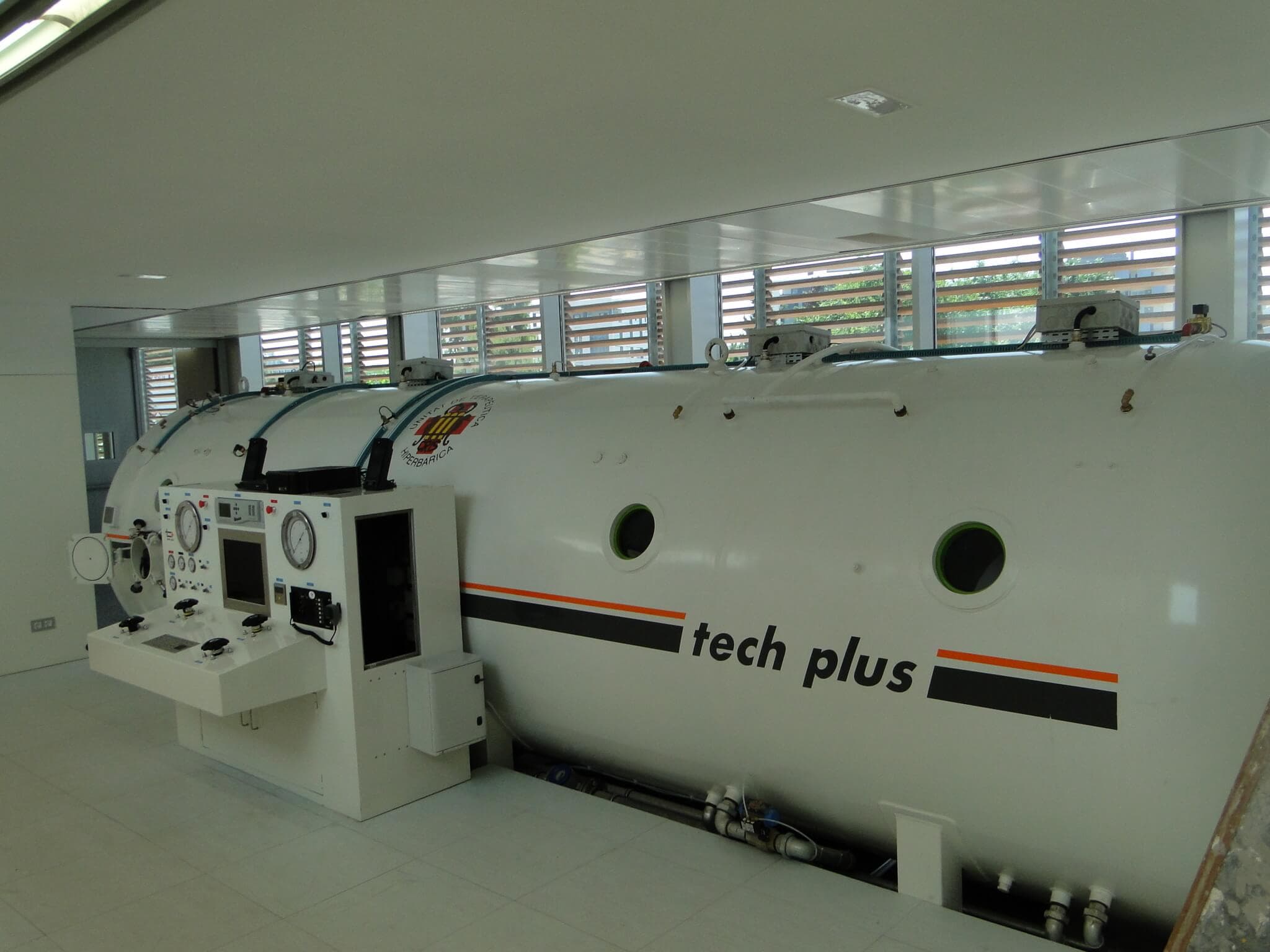
Pressure vessel
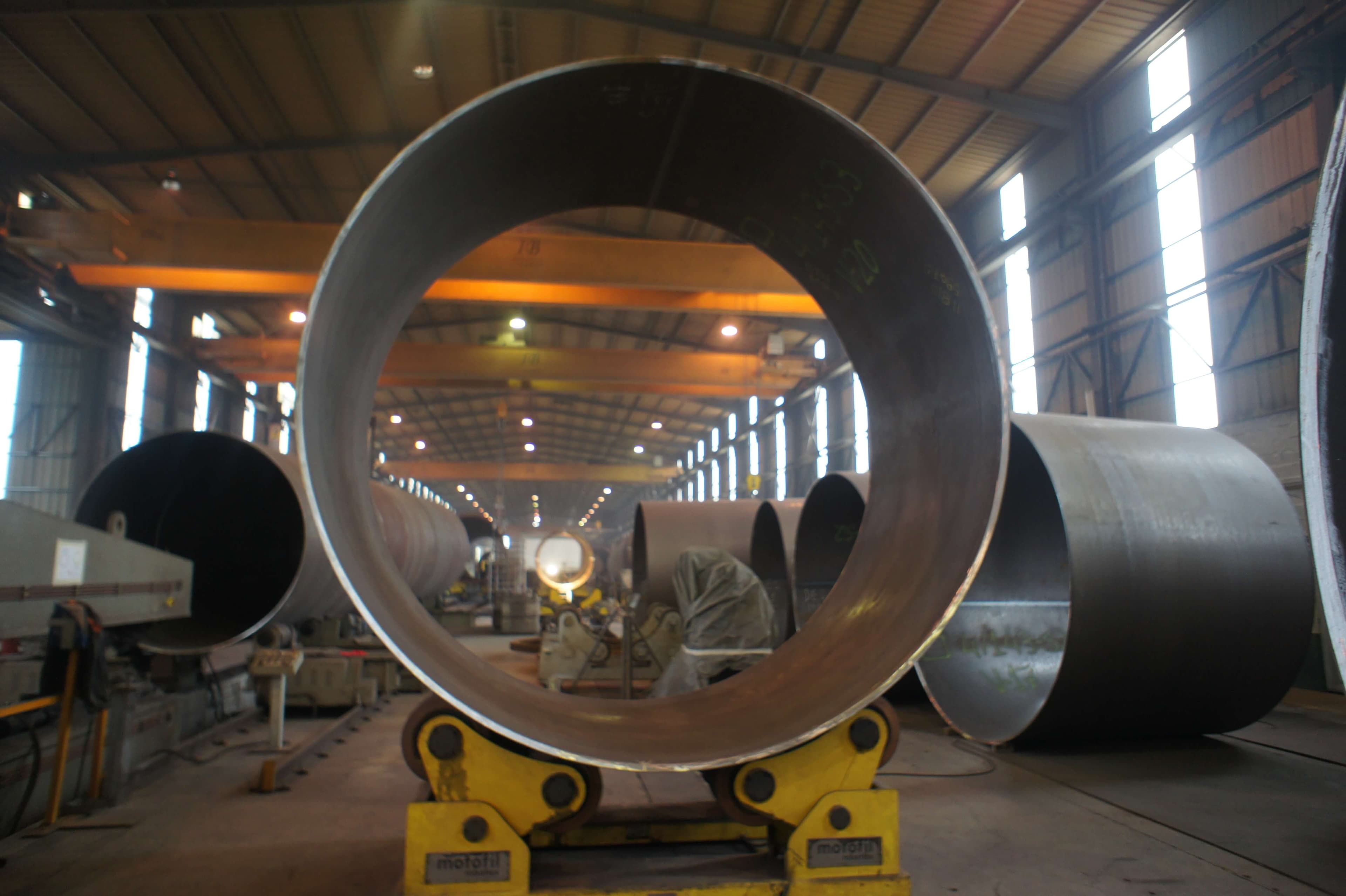
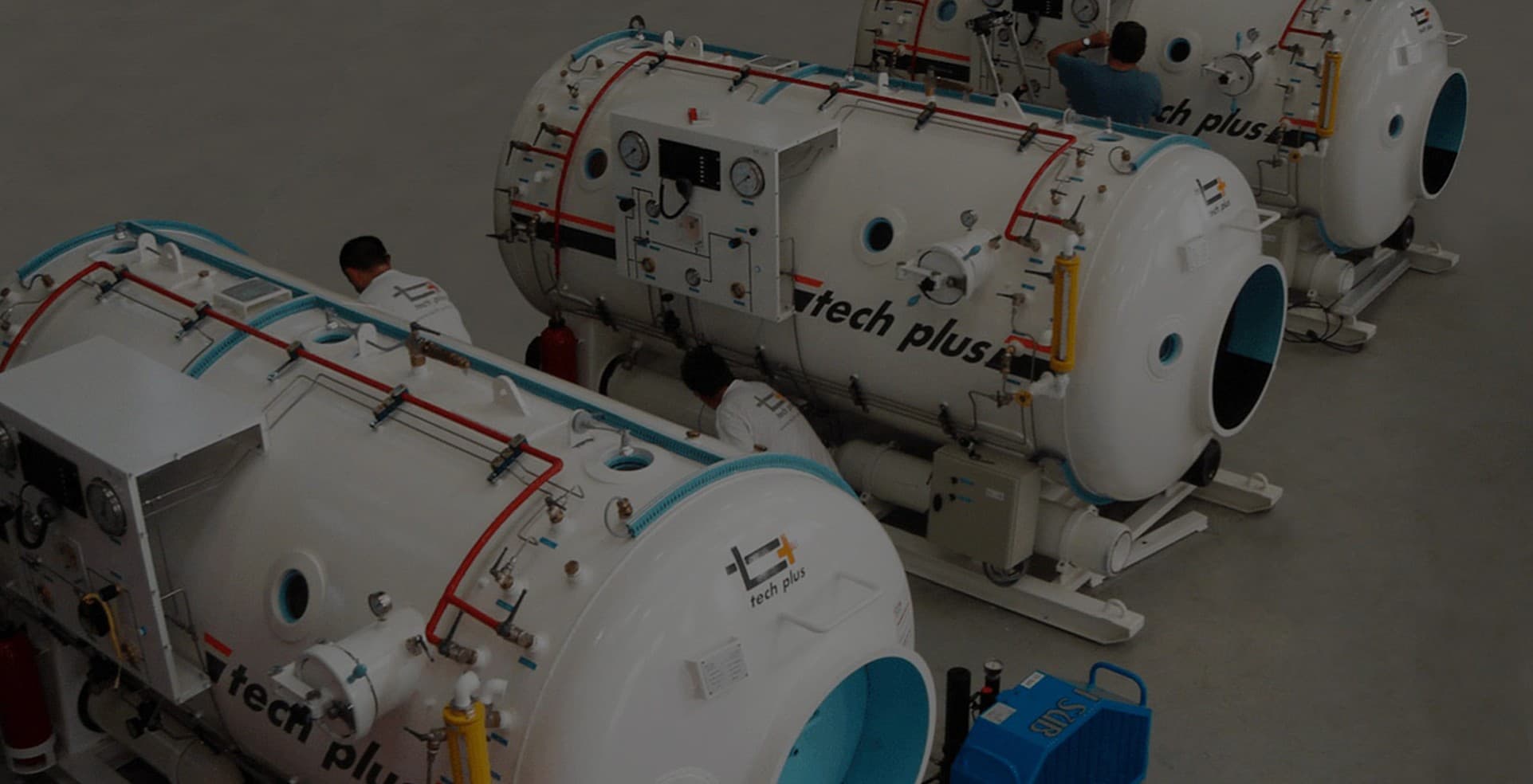
Usually a cylindrical shell, designed for its working pressure and fitted with pressure-tight doors and viewports.
Locks
An entry lock lets people get in or out without decompressing the main chamber; a medical lock passes equipment and medication.
Gas systems
Compressed air for pressurization, oxygen or breathing mixes delivered by masks or hoods, and exhaled gas vented outside.
Control console
From outside, the operator runs compression and decompression, monitors pressure and oxygen, and talks to the occupants.
Six criteria for choosing a hyperbaric chamber
Settle these six points before you compare quotes: they drive the design, cost and safety of the chamber.
Capacity and layout
Monoplace or multiplace, seated or lying occupants, room for an attendant: capacity sets the diameter, the length and the number of compartments.
Working pressure
It depends on the application: hospital treatment, diver recompression or compressed-air work. Our hospital chambers are designed for up to 6 bar.
Locks and access
How many locks, how wide the doors: the chamber must admit a patient on a stretcher, allow attendants to change over mid-session and take an emergency case without interrupting the treatment under way.
Breathing and monitoring
Oxygen masks or hoods, gas analysis, intercom and a clear view of the occupants: the equipment depends on the protocol and the patients treated.
Fire safety
Oxygen-enriched air raises the fire risk: the oxygen level in the chamber must be monitored, and a suitable fire suppression system, such as water spray, must be built in from the design stage.
Installation and support
Transport, installation, commissioning, operator training and maintenance should be planned at the design stage, whether the site is in France or abroad.
How does a hyperbaric chamber work?
An operator runs every session from a console outside the chamber. In a multiplace chamber, which is pressurized with air, each patient breathes pure oxygen through a mask or hood, and the oxygen level in the chamber is kept between 19 and 23% to limit the fire risk. A monoplace chamber holds a single occupant and can be filled with either pure oxygen or compressed air.
Treatment pressures are given in absolute terms (ATA or bar absolute): 1 ATA is atmospheric pressure at sea level, and every 10 metres of seawater adds roughly 1 bar. A treatment at 2.8 bar absolute therefore matches a dive to 18 metres.
Compression
Pressure rises at a controlled rate, giving each occupant time to equalize their ears.
Treatment at pressure
The chamber is held at the prescribed pressure while patients breathe oxygen through masks or hoods.
Decompression
Pressure returns gradually to atmospheric following a decompression table, to limit the risk of decompression sickness.
Reference pressures
- Hyperbaric oxygen therapy: at least 2.0 ATA according to the UHMS; efficacy mostly studied at 2 to 3 bar absolute
- Decompression sickness: recompression usually to 2.8 bar absolute (18 m)
- Tech Plus hospital chambers: designed for up to 6 bar
- Tech Plus containerized chamber: 5 bar
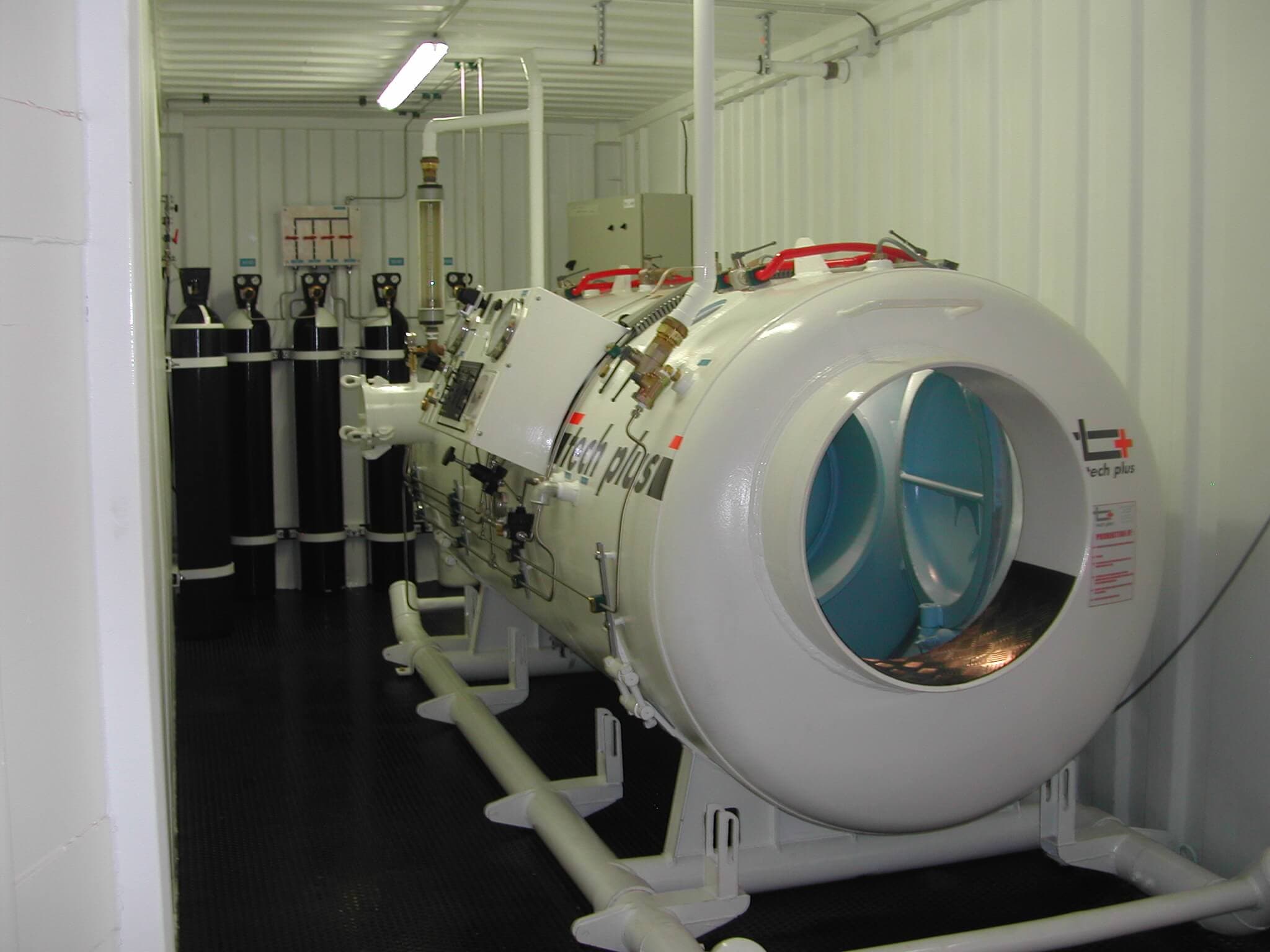
Hyperbaric chamber types: monoplace vs multiplace, hard vs soft
A monoplace chamber holds one patient, lying down. A multiplace chamber holds several patients at once, seated or lying down, with a nurse or attendant able to work beside them. For hospitals, Tech Plus designs multiplace chambers with two or more compartments; its compact monoplace chambers are built for veterinary use.
The second distinction is hard versus soft. Medical, military and industrial chambers are generally rigid pressure vessels. Soft chambers sold for wellness run at low pressure and fall outside the UHMS definition of hyperbaric oxygen therapy.
Beyond these two choices, each application brings its own constraints on pressure, mobility, standards and occupancy. The main chamber families are listed below; Tech Plus also offers chamber rental and operator training.
The main hyperbaric chamber families
- Multiplace hospital chambers for hyperbaric oxygen therapy
- Transportable emergency recompression chambers for temporary needs in and outside hospitals
- Military recompression chambers for navies, clearance divers and combat divers
- Deck decompression chambers for commercial diving, installed on deck or in a container
- TBM man locks for compressed-air interventions at the cutting head
- Veterinary hyperbaric chambers for dogs, cats and horses
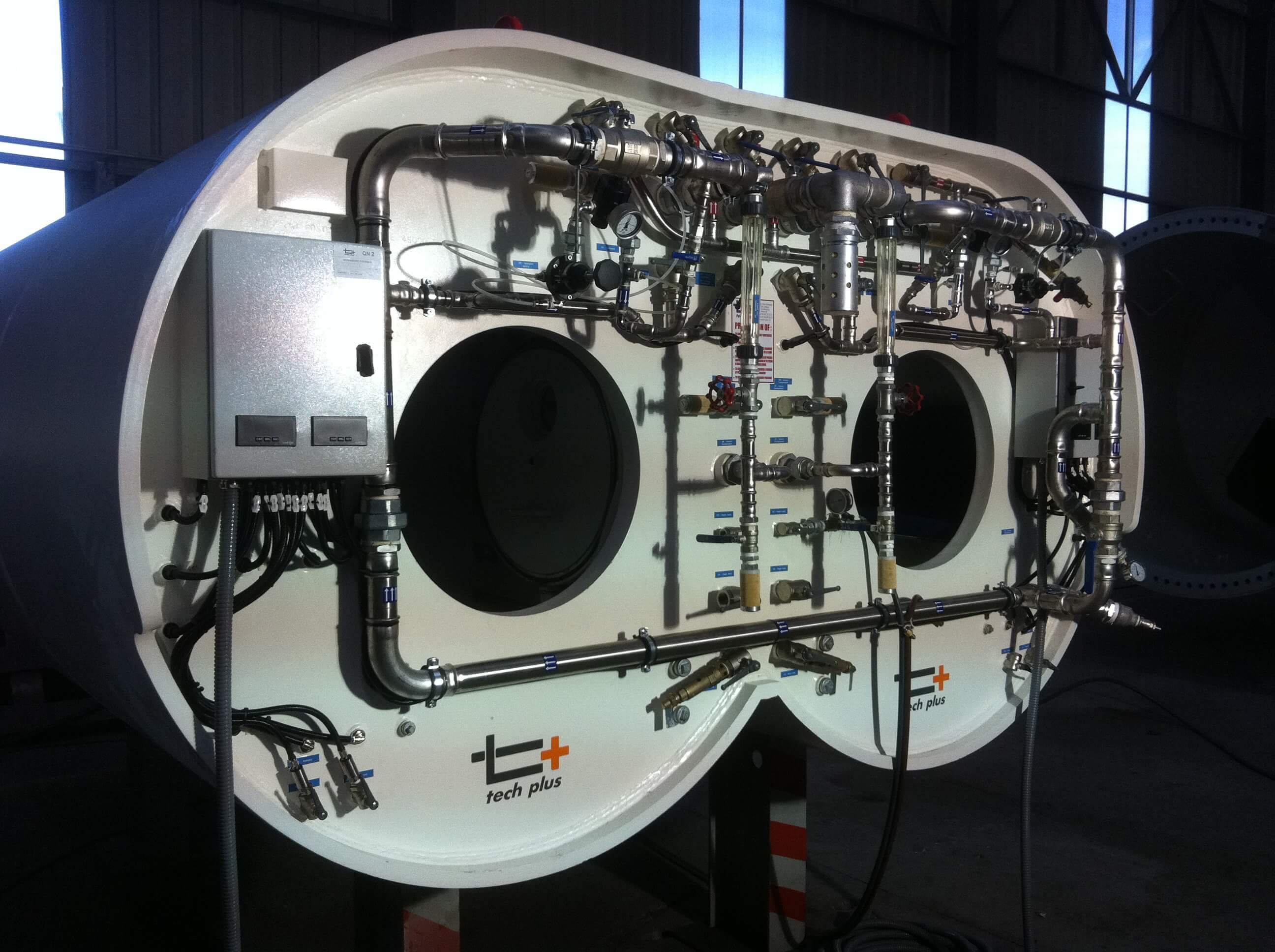
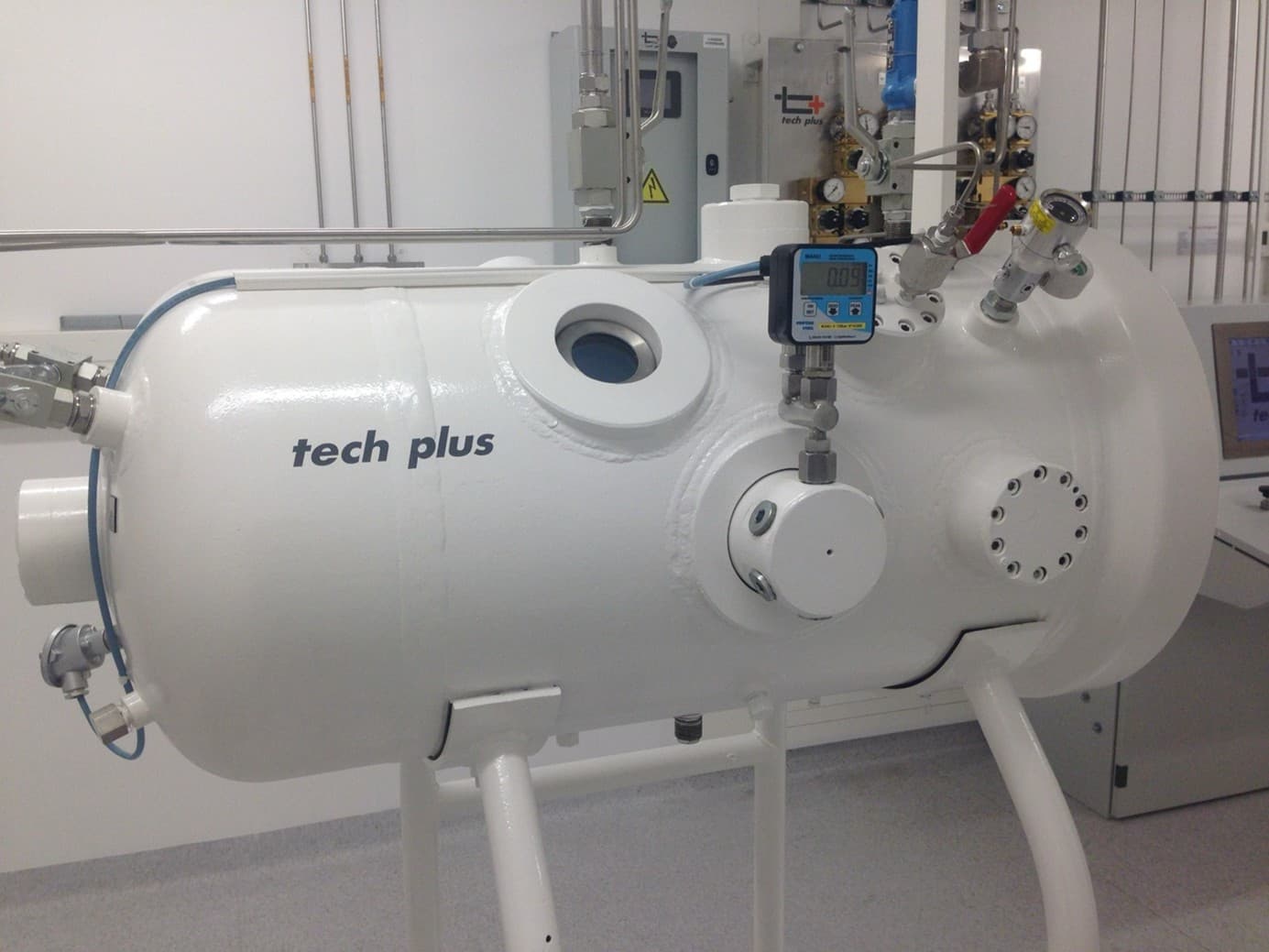
Hyperbaric chamber standards and medical indications
In Europe, a hyperbaric chamber is first and foremost pressure equipment. The Pressure Equipment Directive 2014/68/EU applies once the maximum allowable pressure exceeds 0.5 bar and classifies equipment into categories I to IV by increasing hazard. Application-specific standards and guidance apply on top: EN 14931 for multiplace chambers used for hyperbaric therapy, EN 12110 for tunnelling machine air locks, and IMCA guidance for commercial diving systems. A medical chamber also falls under the Medical Device Regulation (EU) 2017/745.
Tech Plus designs its chambers within the framework of Directive 2014/68/EU, its TBM locks to EN 12110 and its diving chambers in line with IMCA guidance. Work towards EN ISO 13485 and MDR 2017/745 is in progress.
On the medical side, hyperbaric oxygen therapy requires a physician's prescription and oversight. Accepted indications are set by reference bodies, the Undersea and Hyperbaric Medical Society (UHMS) in the United States and the European Committee for Hyperbaric Medicine (ECHM) in Europe: decompression sickness, gas embolism, carbon monoxide poisoning, delayed radiation injury, selected problem wounds, necrotizing soft tissue infections and sudden hearing loss, among others. This guide is technical information and does not replace the advice of a hyperbaric physician.
Conditions where HBOT is not indicated (ECHM, 2016 consensus conference)
- Autism spectrum disorders
- Multiple sclerosis
- Cerebral palsy
- Tinnitus
- Placental insufficiency
- Acute phase of stroke
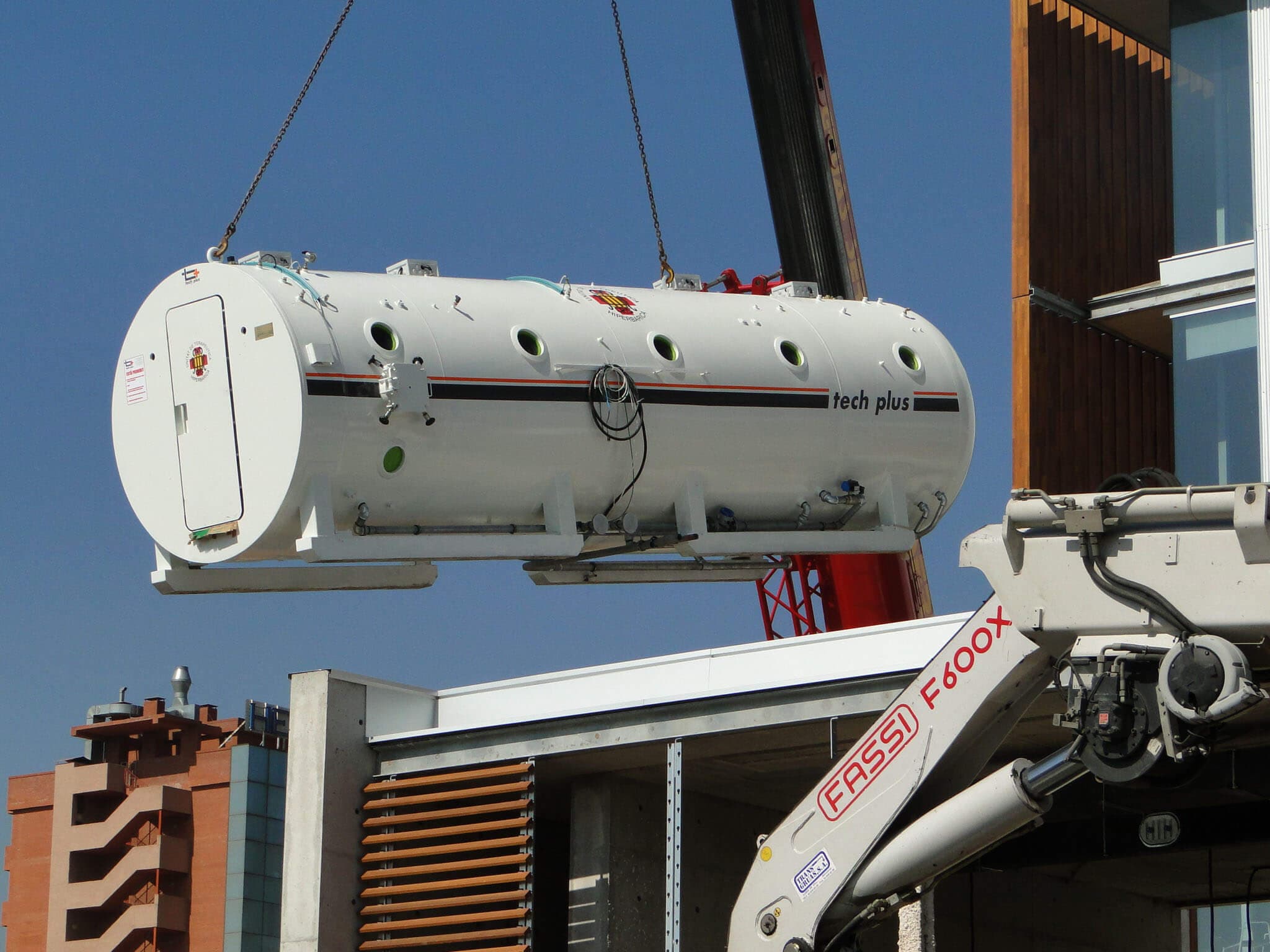
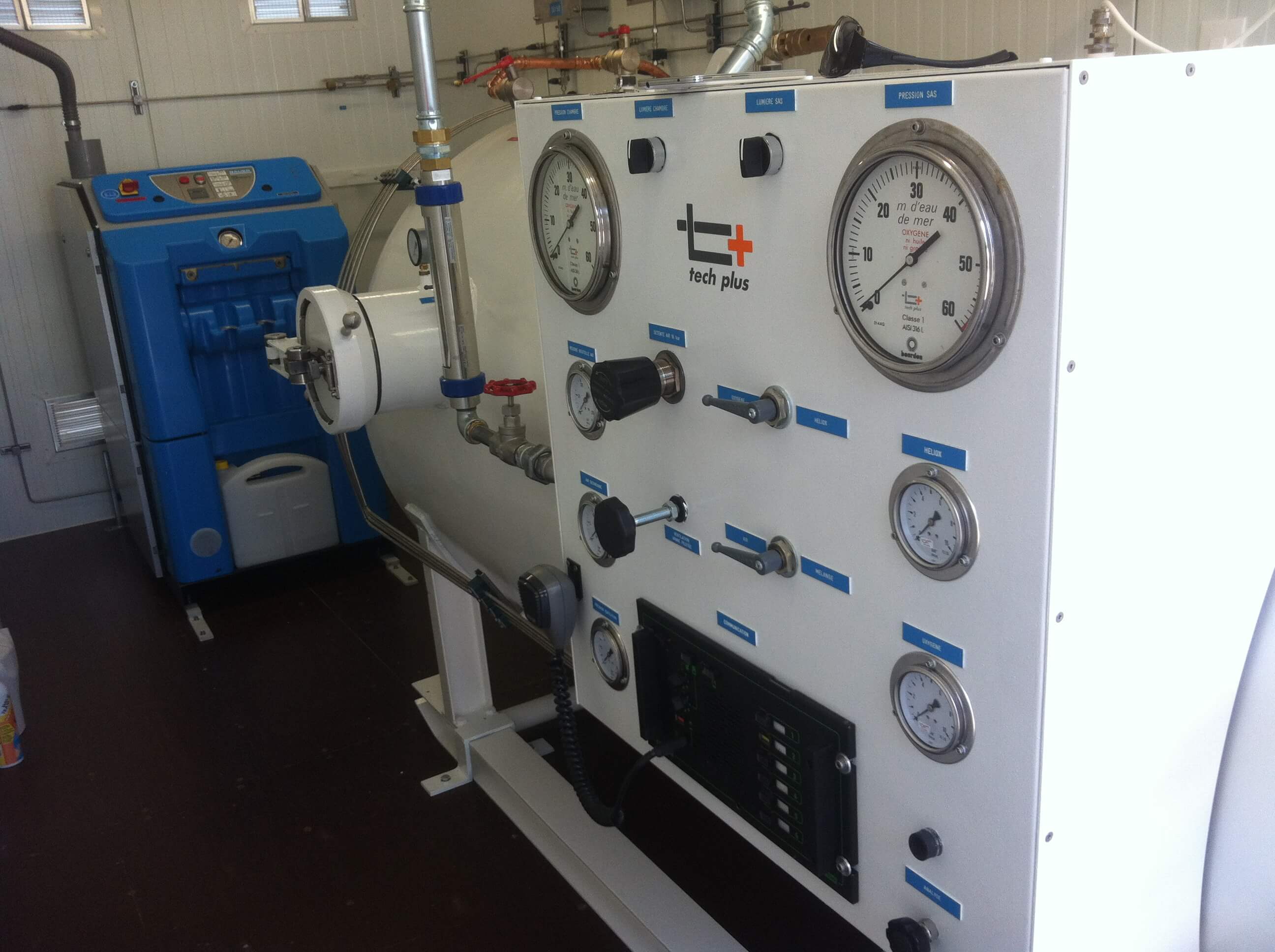
Technical specifications
- Hospital chambers
- Multiplace, up to 6 bar
- Containerized chamber
- 5 bar, 20 ft container
- Experience
- Since 1988, 28+ countries
- Engineering
- Design office in Bandol, France
- Chamber families
- Hospital, military, diving, TBM, veterinary
- Emergency recompression
- TP1228 model, selected by UniHA (lot 3, 2022–2026)
Standards and regulations
- Directive 2014/68/EU (PED)
- EN 12110 (TBM air locks)
- Designed in line with IMCA guidance
- EN ISO 13485 (in progress)
- MDR (EU) 2017/745 (in progress)
In the press
Related solutions
Planning a hyperbaric chamber project?
Tell us about your application, site constraints and schedule: our design office will point you to the right configuration.
Centre d'entreprises du Val d'Aran178 chemin de Roumpinas83150 Bandol, France